Saturday morning, second half of the youth league game. Your ten-year-old daughter chases the ball, plants her foot wrong on a cut and ends up sitting on the grass holding her ankle. The coach grabs ice from the cooler, she cries for a bit, and twenty minutes later she's begging to go back in. On the drive home in the truck comes the usual question: will this heal on its own, or does someone need to look at it?
In La Porte, between weekend soccer, school football and spring baseball, bumps and twisted ankles come with growing up. Most heal at home; a few need a checkup and some can't wait. Here's how to tell them apart.
First, what can't wait
Before ice and wraps, set these situations aside:
- Call 911 if your child lost consciousness even for a few seconds, has a seizure, can't move an arm or leg, has no feeling in part of the body, is struggling to breathe or took a hard hit to the neck or back. After a neck injury, don't lift them or pull off the helmet: let the paramedics move them.
- Go to an emergency room if the bone looks bent or out of place, breaks through the skin, the pain is so bad they won't let you touch the area, you heard a crack at the moment of impact and it swelled right away, or the fingers or toes look pale or bluish or feel cold.
These point to a possible broken bone or an injury that needs imaging and immediate care.
Head hits: the rule is out of the game
A football helmet protects against a cracked skull, but it doesn't prevent a concussion. And it doesn't take a dramatic collision: two soccer players knocking heads, a baseball to the face or falling backward and hitting the back of the head on the ground can all shake the brain.
According to the CDC's HEADS UP program, after a blow to the head watch for:
- A headache that gets worse or won't go away
- Vomiting, especially more than once
- Confusion, not recognizing people or not knowing where they are
- Unusual drowsiness or being hard to wake up
- Slurred speech, dizziness, balance problems
- One pupil larger than the other
- Behavior changes: irritable, acting strange or "just not himself"
If you notice any of these, take your child to an emergency room, or call 911 if things get worse fast. And even if they seem fine, the rule after a head hit in sports is simple: no more playing for the rest of that day. In Texas, school teams must pull a player with a suspected concussion and require medical clearance before the player returns. For the first few nights, keep them sleeping close to you so you can keep an eye on them.
Twisted ankles and sprains: home care
A sprain happens when ligaments, the bands that connect one bone to another, get stretched or partly torn. In kids who play sports the ankle is the most common spot, followed by the knee, the wrist and the fingers that catch the ball.
If your child can put weight on the foot, the swelling is moderate and none of the warning signs above are present, the home approach known as rest, ice, compression and elevation works well:
- Rest. No running or practice while it hurts. Full immobilization isn't needed, but the ligament does need a break for the first few days.
- Ice. An ice pack or a bag of frozen vegetables wrapped in a towel, about 15 to 20 minutes every few hours for the first two days. Never put ice straight on the skin.
- Compression. An elastic wrap helps control swelling. Snug, not tight: if the toes turn cold or purple or start tingling, loosen it.
- Elevation. On the couch with the ankle up on two pillows, higher than the heart.
If they need something for pain, ask the medical team what suits their age and weight. Don't give adult medicine or repeat whatever worked for an older sibling.
What you want to see is a little improvement every morning. A mild sprain usually lets a child walk normally within one to two weeks; getting back on the field takes somewhat longer.
When a checkup makes sense
Not everything that needs attention is an emergency. Bring your child in if:
- Two or three days later they still won't put weight on the foot or limp just as badly as on day one
- The swelling or bruising is growing instead of going down
- The pain is right over the bone rather than in the soft area around it
- The knee or ankle "gives out" or buckles when they walk
- It's the third time this season they've rolled the same ankle
Keep one difference between kids and adults in mind: a child's bones are still growing and have growth zones near the joints. An injury that would be "just a sprain" in an adult can involve that zone in a child. So if the pain doesn't ease, don't brush it off with "it'll go away." If the clinic's medical team sees that an X-ray is needed, they'll tell you plainly at that first visit.
Scrapes, cuts and toenails: what we take care of here
Sports leave wounds too. Soccer cleats, a slide into second base or a scrape against the outfield fence leave dirt-packed abrasions and cuts that won't close on their own.
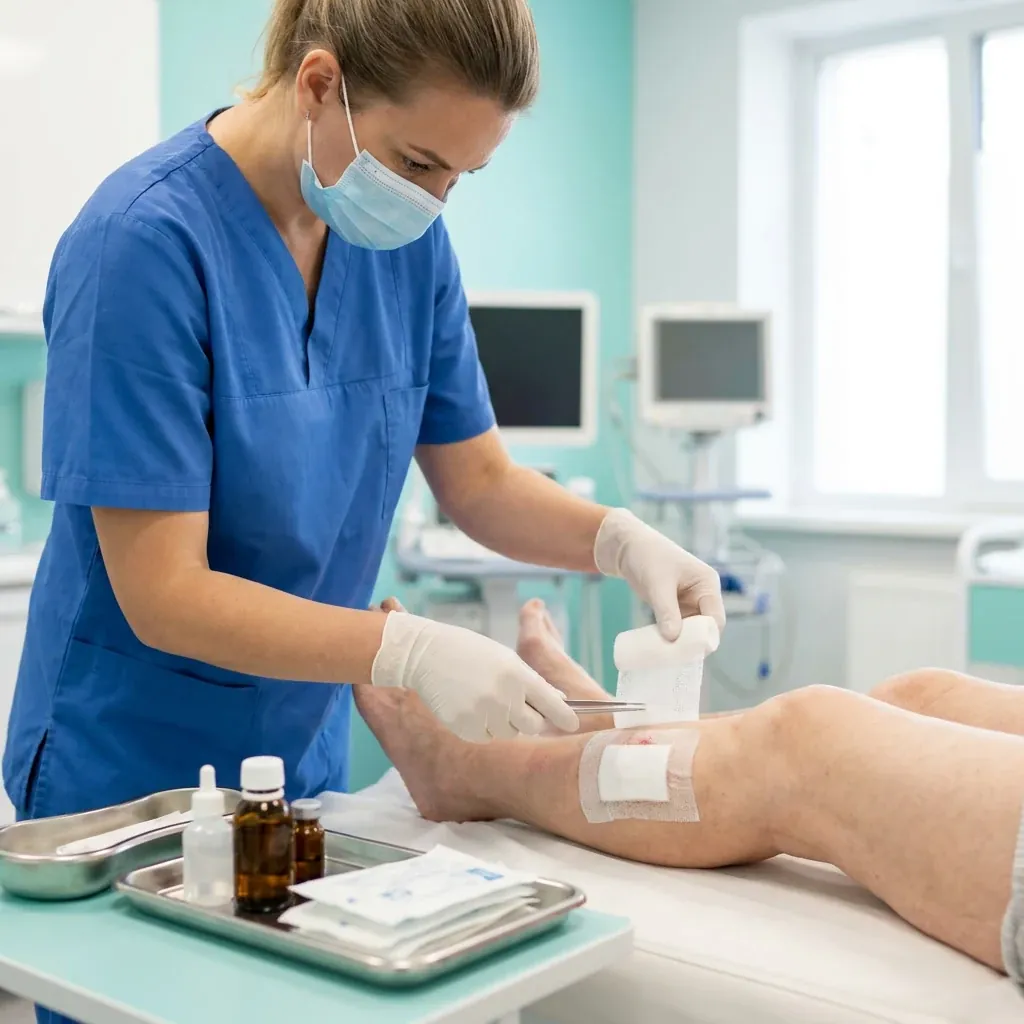
- A large, dirty scrape, or one that starts turning red and warm, needs a thorough cleaning. We do wound care: washing, disinfection, dressing and follow-up until it closes.
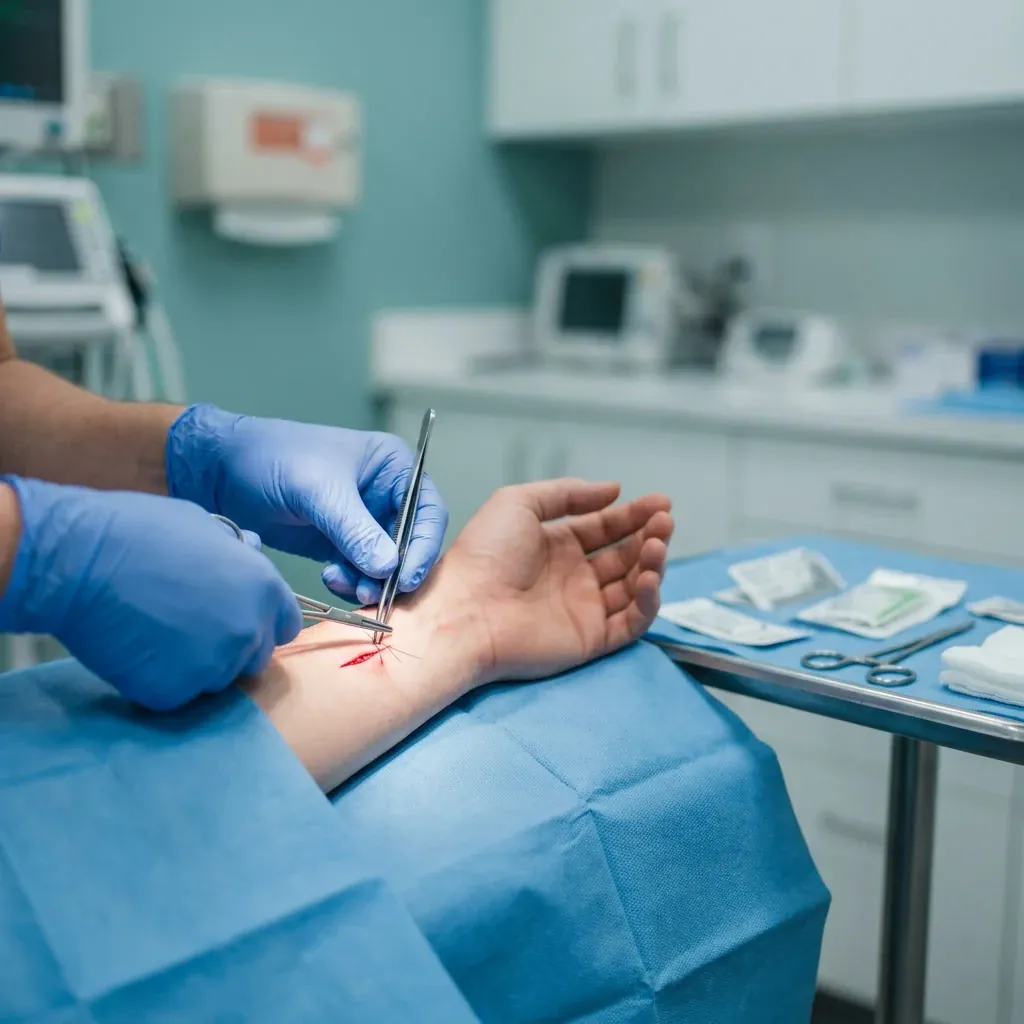
- A cut with gaping edges, or one that keeps bleeding after ten minutes of firm pressure, probably needs stitches. We do wound suturing, and for children or small cuts on the face we sometimes close them with surgical glue or strips, no needle involved.
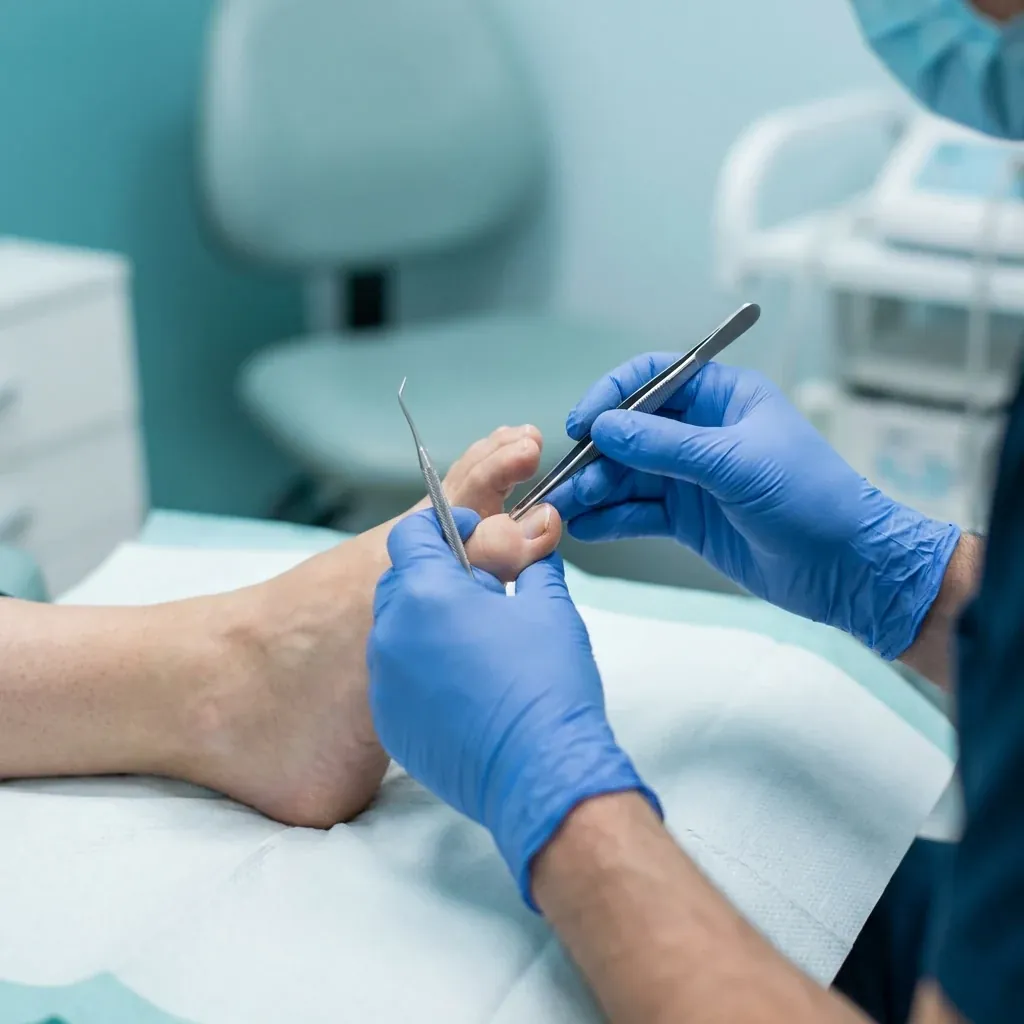
- Getting stepped on and kicking the ball over and over are a common cause of ingrown big toenails in soccer players. If the toe is red, swollen or has pus, we check and treat ingrown toenails with local anesthesia.
Bring the vaccination card or the date of the last tetanus shot, because with dirty wounds that's the first thing we ask.
A quick sideline chart
| What you see | What to do |
|---|---|
| Twisted ankle, can bear weight, moderate swelling | Rest, ice, compression and elevation at home |
| No better in two or three days, or still limping the same | Checkup at the clinic |
| Dirty scrape or a cut that won't stop bleeding | Wound care or stitches at the clinic |
| Head hit with vomiting, confusion or heavy drowsiness | Emergency room |
| Bent bone, a crack with instant swelling, cold or pale fingers or toes | Emergency room |
| Passed out, seizure, neck injury or can't move a limb | 911 |
Before next season
Many repeat sprains come from an ankle that never fully healed. The sports physical the school or league asks for is a good moment to tell us about last year's injuries: if your child rolled an ankle twice or had a head hit, mention it even if it no longer hurts. Bring the team form and we'll complete it during the visit.
It also helps to warm up before every game, wear cleats that fit (a cousin's hand-me-downs don't always hold the foot) and not hide pain to avoid the bench.
If you're coming straight from the game
We see kids and adults on Spencer Highway, in 77571, as walk-ins or by calling (346) 222-1006 to book. If you show up with the uniform still covered in grass, a scraped knee or an ankle that isn't getting better, the clinic's medical team examines your child, explains in Spanish or English what care to follow at home and when it's safe to play again. And if something is prescribed, you buy what the medical team prescribed right there at our pharmacy, so your kid can head straight to the couch with that foot up.