Plant season brings a scene we know well along the Ship Channel. A 28-year-old signs on for a turnaround at a Ship Channel refinery, goes through the routine screening the contractor requires, and the nurse takes his reading twice because the number looks off. He laughs it away: "I haul pipe for twelve hours and don't even get tired." He walks out with a sheet of paper that says high blood pressure, still convinced that's his dad's problem, not his.
High blood pressure gives no warning, and in your twenties or thirties almost nobody goes looking for it. So this piece is for the young men of La Porte, Deer Park and Baytown who live on long shifts, heavy driving or port work: which parts of that routine push pressure up, which numbers matter, and what you can start doing this week.
"I'm too young for that": the most common mistake
Blood pressure is the force your blood puts on the artery walls. When it stays high for months or years, those walls stiffen, the heart works harder than it should, and the kidneys, eyes and brain take damage quietly. It doesn't hurt, it doesn't make most people dizzy, and it doesn't sap your strength at work. That's why so many young men find out by accident: at the DOT exam for the truck, at the plant physical, or while being seen for something else.
Youth doesn't protect you when your lifestyle is pushing the other way. And in an industrial area like ours, a typical workweek stacks several of those pushes together.
What heavy work does to your blood pressure
Physical effort on its own is good for the heart. The trouble is everything that comes bundled with certain jobs:
- Rotating and night shifts. Sleeping during the day, switching schedules every two weeks and clocking out at 6 a.m. throws off the body clock. Short or poor sleep is linked to higher pressure.
- Twelve-hour turnarounds, weeks on end. With no days off, the body never recovers, and the fatigue gets covered up with more caffeine.
- Heat and dehydration. Sweating all day on too little water makes the heart work harder to move blood around.
- Gas station and food truck meals. Tacos, breakfast burritos, chips and processed meats are loaded with salt, and salt makes you hold fluid, which raises pressure.
- Lifting heavy while holding your breath. Straining spikes pressure in the moment; if yours already runs high, that spike is bigger.
The stress nobody talks about on the crew
Men rarely bring up stress, but it's there: a supervisor pushing to finish on schedule, a paycheck that doesn't stretch, money to send back home, the truck note, overtime you can't turn down. Constant stress keeps the body on alert, with heart rate and pressure sitting above normal.
What weighs most isn't the stress itself but how it gets handled: plenty of guys unwind with beers after the shift, cigarettes, vaping or fast food at midnight. Each of those outlets adds to blood pressure in its own way.
Energy drinks: night shift fuel
Gas station coolers along Spencer Highway and Highway 146 carry whole rows of energy drinks, and on the night shift they're practically part of the uniform. They pack a lot of caffeine, often sugar, plus other stimulant ingredients.
The American Heart Association (AHA) reported on a small study in healthy young adults: people who drank 32 ounces of an energy drink within an hour (about two large cans) had higher blood pressure and changes in the heart's electrical activity four hours later. The same report says people with high blood pressure or heart problems should limit these drinks or keep an eye on how much they have.
What we tend to see in young men is the combo: one can to get going, another around midnight, a pre-workout at the gym in the afternoon and coffee on top. If you get palpitations, shaky hands, headaches or can't fall asleep once you finally get home, your body is telling you it's too much.
The numbers: when it counts as high blood pressure
According to the AHA, these are the categories for adults:
| Category | Top number (systolic) | Bottom number (diastolic) |
|---|---|---|
| Normal | under 120 | and under 80 |
| Elevated | 120 to 129 | and under 80 |
| Stage 1 hypertension | 130 to 139 | or 80 to 89 |
| Stage 2 hypertension | 140 or higher | or 90 or higher |
One high reading isn't a diagnosis: pressure climbs with coffee, a cigarette, rushing or nerves in the exam room. What matters is that it stays high across several readings on different days.
A one-week trial, without quitting your job
You don't have to overhaul your life overnight. Try this for seven days and jot down how you feel:
- Swap the second energy drink for cold water or unsweetened sparkling water, and skip them entirely in the last few hours before sleep.
- Pack a lunch from home with fewer cold cuts and less salt than the gas station offers.
- After a night shift, darken the room and put the phone away: aim for one full block of sleep.
- Trade one of the after-work beers for something else.
- If you can get hold of an upper-arm cuff, check yourself at rest, seated, at the same time each day, and write the numbers down to bring in.
If you already take blood pressure pills, none of these changes means stopping them: talk with the clinic's medical team before changing anything about your treatment.
What we check at the clinic
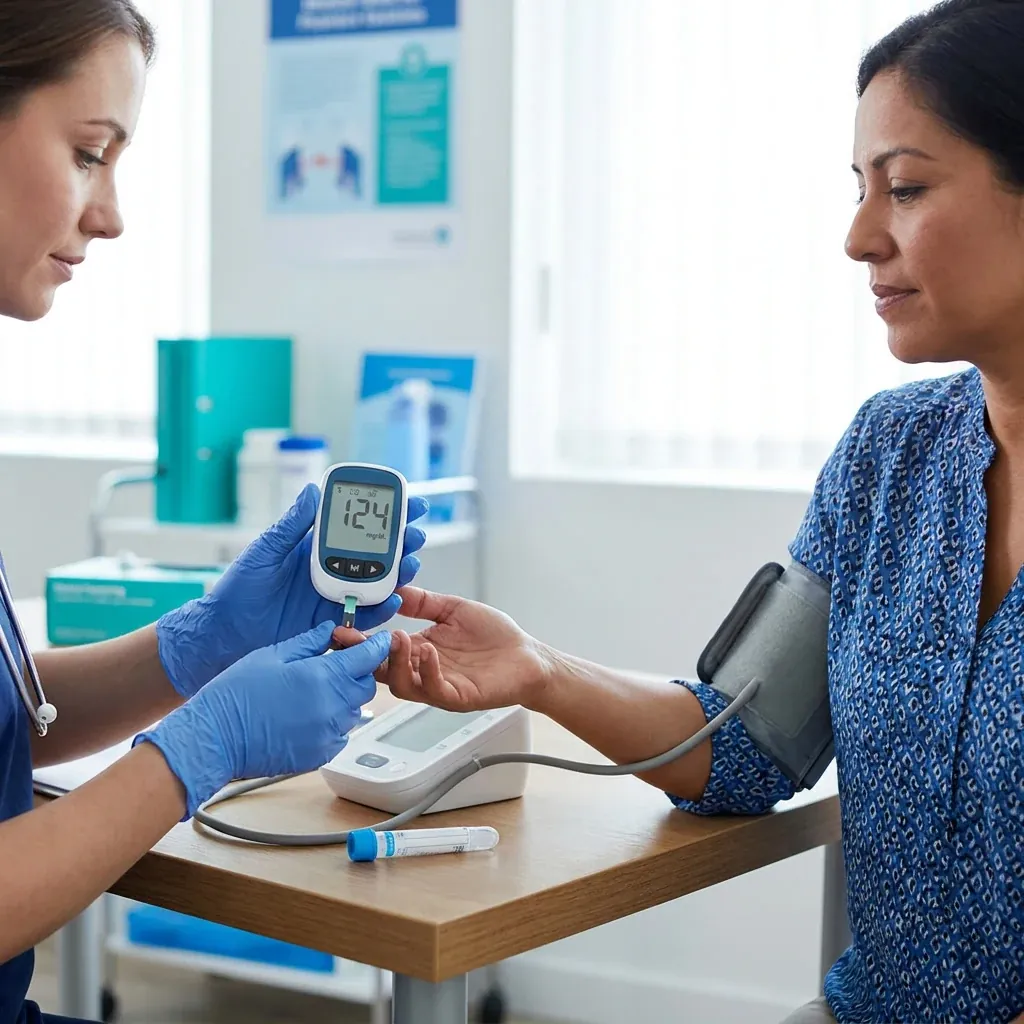
If your pressure came back high at work, or you just want to know where you stand, we take it the right way at the clinic, seated and at rest, and explain what the numbers mean in Spanish or English. Ongoing care for high blood pressure, together with sugar and cholesterol, is part of our chronic condition management service, where the lipid panel runs through our own lab.
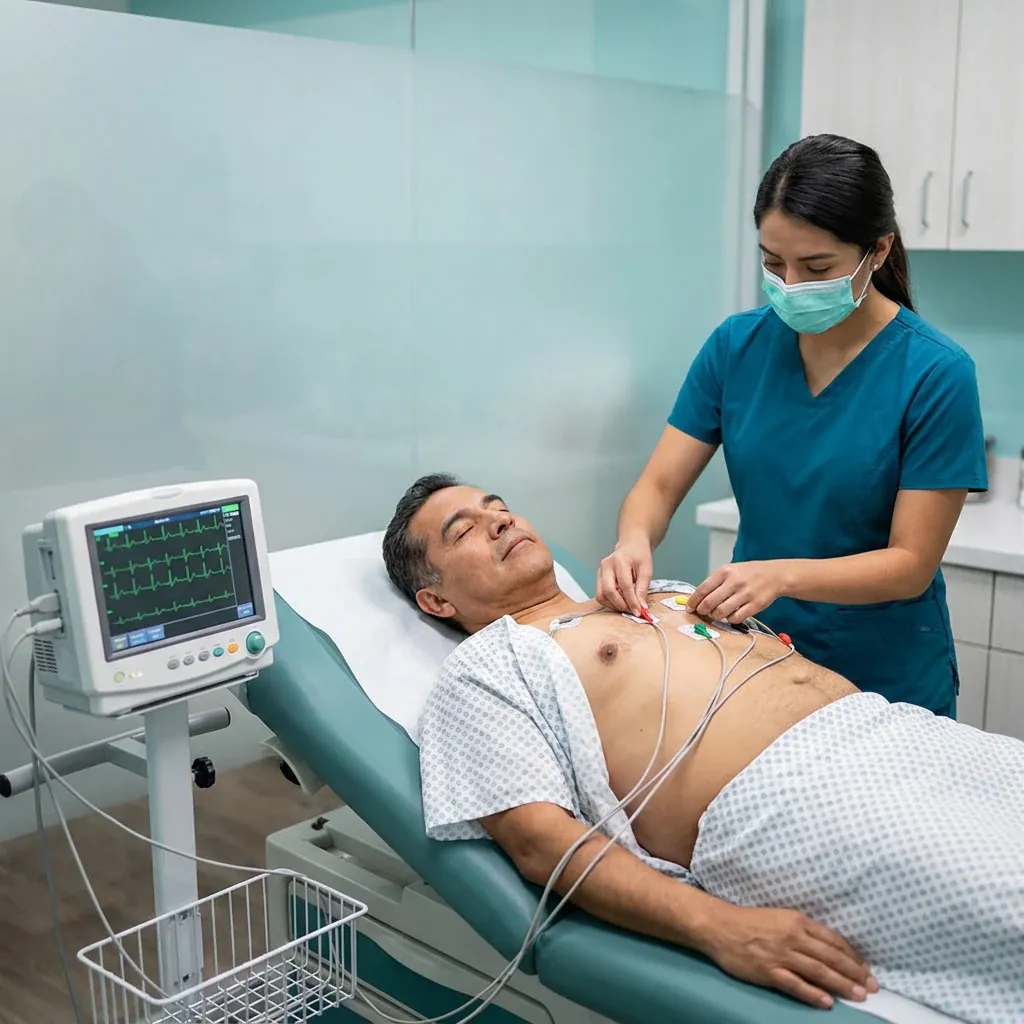
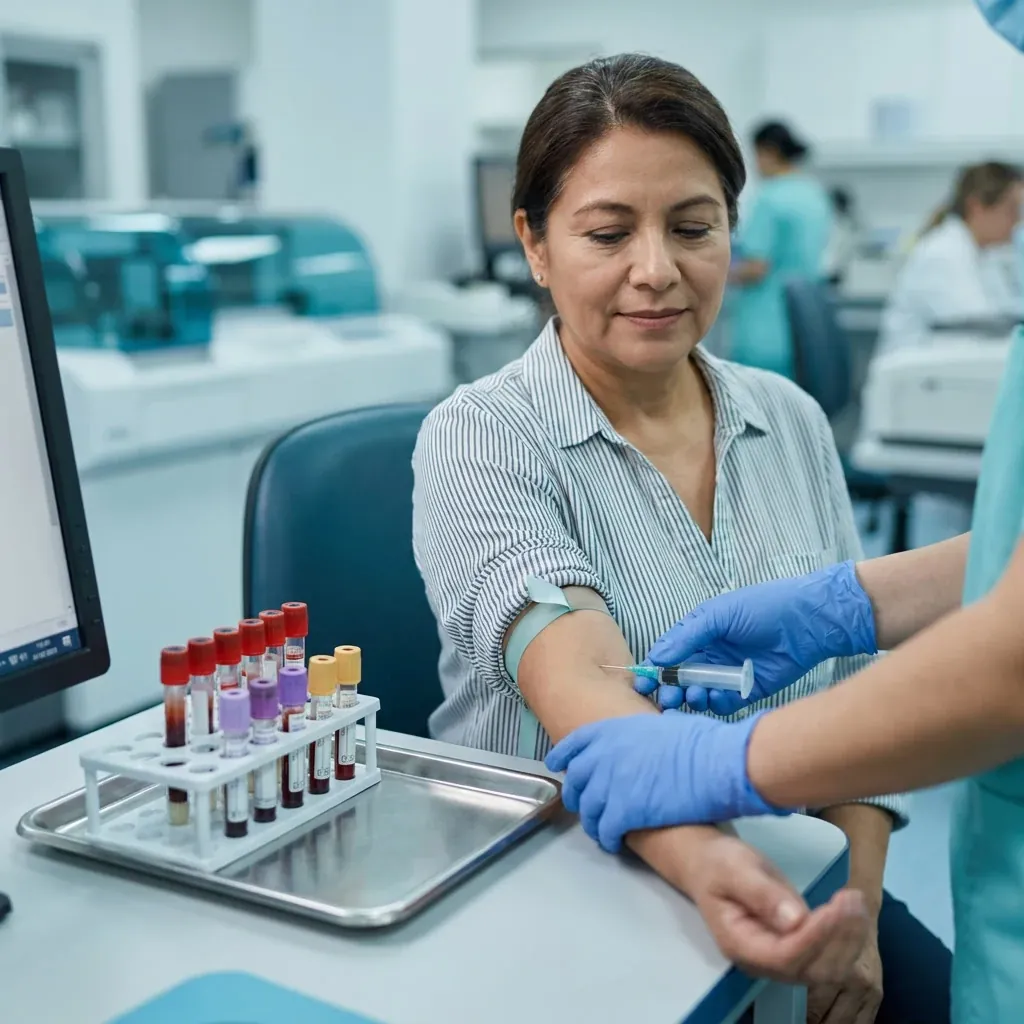
When there are palpitations, high readings or heart attacks in the family, the clinic's medical team may order an electrocardiogram, which is quick and painless, and use blood work to see how your kidneys, glucose and lipids are doing. If it's been years since your last full checkup, a men's health visit pulls all of that into one appointment.
And since free time between shifts is scarce, if the medical team decides you need treatment they'll walk you through fitting it around a rotating schedule, and you can pick up what the medical team prescribed right there at the clinic's pharmacy, with no extra stop before you head home to sleep.
When not to wait: call 911
Some warning signs aren't for a clinic visit, and they're not a reason to drive yourself to the hospital. Call 911 if you or a coworker has:
- Chest pain that squeezes like a steel beam is sitting on you, or that runs down the arm or into the back or jaw.
- Sudden shortness of breath, cold sweat or fainting.
- A face drooping on one side, or an arm or leg that goes weak or numb.
- Slurred speech or trouble understanding what others are saying.
- A sudden, crushing headache or loss of vision.
In its guide to checking blood pressure at home, the AHA says a reading above 180/120 with any of those symptoms is an emergency: don't wait to see if it comes down on its own.
Before your next turnaround
If you're 25, 30 or 35 and have never given your blood pressure a thought, use a quiet week between jobs to get checked in La Porte, in the 77571. Bring the sheet from the plant physical or the DOT exam if they gave you one, tell us how many cans you drink a day and what your schedule looks like, and you'll leave with a plan that fits your workweek.