People who don't live here assume that by October the Texas coast has cooled off. Anyone pouring concrete on a Fairmont Parkway job site, mowing yards in Shoreacres, nailing shingles on a Bayshore roof or working a shift at a plant along the Ship Channel knows better. By noon the sun is still brutal, and the Gulf humidity keeps sweat from drying on your skin. You sweat just as much as in August, but because the calendar says fall, you drink less.
That slip has a consequence few people connect to their job: what it does to your urine. Below we explain why heat and too little water affect the urinary tract, how to use urine color as a gauge during your shift, and when it makes sense to have us take a look.
What happens when you sweat all day
When you lose water through sweat and don't put it back, your kidneys go into savings mode. They hold on to every bit of water they can and flush waste out in a small amount of fluid. That's why after a few hours in the sun you pee less often, and what comes out is darker and smells stronger. That's your body conserving, not a disease, but it tells you the tank is running low.
The trouble starts when this happens day after day, season after season. With little urine, the bladder gets rinsed less often, and bacteria that make it up the urethra have more time to settle in and multiply. Very concentrated urine also makes it easier for certain minerals to form crystals that can, over time, grow into stones. U.S. health agencies such as the CDC and NIH list low fluid intake among the factors that favor both urinary tract infections and kidney stones. Not everyone who works in the sun will get one, but the odds go up.
Holding it on the site, on the roof or on the line
There's a second habit that stacks on top of the first, and it's common in outdoor and industrial work: holding it in. The reasons are familiar:
- The porta-potty is on the far side of the site, and climbing down from a roof in a harness takes time.
- Landscaping crews move from house to house and there isn't always a place to stop.
- At the plant or the port terminal, the restroom is far from your work area, or you have to strip off protective gear to use it.
- Plenty of workers drink less on purpose "so they won't have to go."
Every time your bladder stays full for hours, standing urine gives bacteria the upper hand. And cutting back on water to avoid bathroom trips is the worst combo of all: scant, concentrated, held urine. If you're a woman working on a crew or a job site, the infection risk is higher still, because the urethra is shorter.
Urine color: a practical gauge for your shift
You don't need any gadget to know whether you're running dry. Just check the color each time you go:
- Pale yellow, like lemonade: you're well hydrated. Keep it up.
- Bright, deep yellow: you're starting to fall behind. Drink at your next break, thirsty or not.
- Amber, honey or tea-colored: you're dehydrated. Get in the shade, drink water and tell your supervisor if you also feel off.
- Dark brown, cola-colored or reddish: this is more than missing water. It may be blood, or muscle breakdown from heat and hard work. Get it checked during that shift, not at the end of the week.
Two things to keep in mind: some vitamins and medicines turn urine bright yellow or other colors, and foods like beets can tint it red. Frequency counts too. If you've gone only once all morning and only a little came out, your body is asking for water even when the color doesn't look that dark.
How much water to drink on the job
OSHA's guidance for working in heat (its Water. Rest. Shade. campaign) is straightforward: drink water frequently throughout the shift instead of waiting until you're thirsty, and employers should keep it cool, close to the work area and in enough quantity for the whole day.
A few habits that work for crews around here:
- Bring your own insulated jug with ice on top of the water at the site, and refill it on every break.
- Take a few swallows every time you come down off the roof or move to the next yard, not just at lunch.
- Set a phone alarm mid-morning and mid-afternoon to check whether you've been to the restroom and what color it was.
- If you have kidney or heart disease and were told to limit fluids, ask at your visit how much water is right for you.
When it's more than just low water
Dark urine that clears up after you drink is dehydration. But if any of the following shows up, it's worth getting checked in the next few days, even in a busy stretch at work:
- Burning when you pee that sticks around after you've rehydrated.
- Running to the restroom over and over with very little coming out, or feeling like your bladder never fully empties.
- Pain on one side of your back under the ribs, or pain that travels down toward the groin.
- Pink, red or brown urine that doesn't clear with water.
- Cloudy or strong-smelling urine for several days.
Men working in industry tend to brush this off "because there's no time." A urinary infection in a man always deserves a checkup, and pairing it with a men's health visit makes sense if it's been years since you saw anyone.
What we do at the clinic
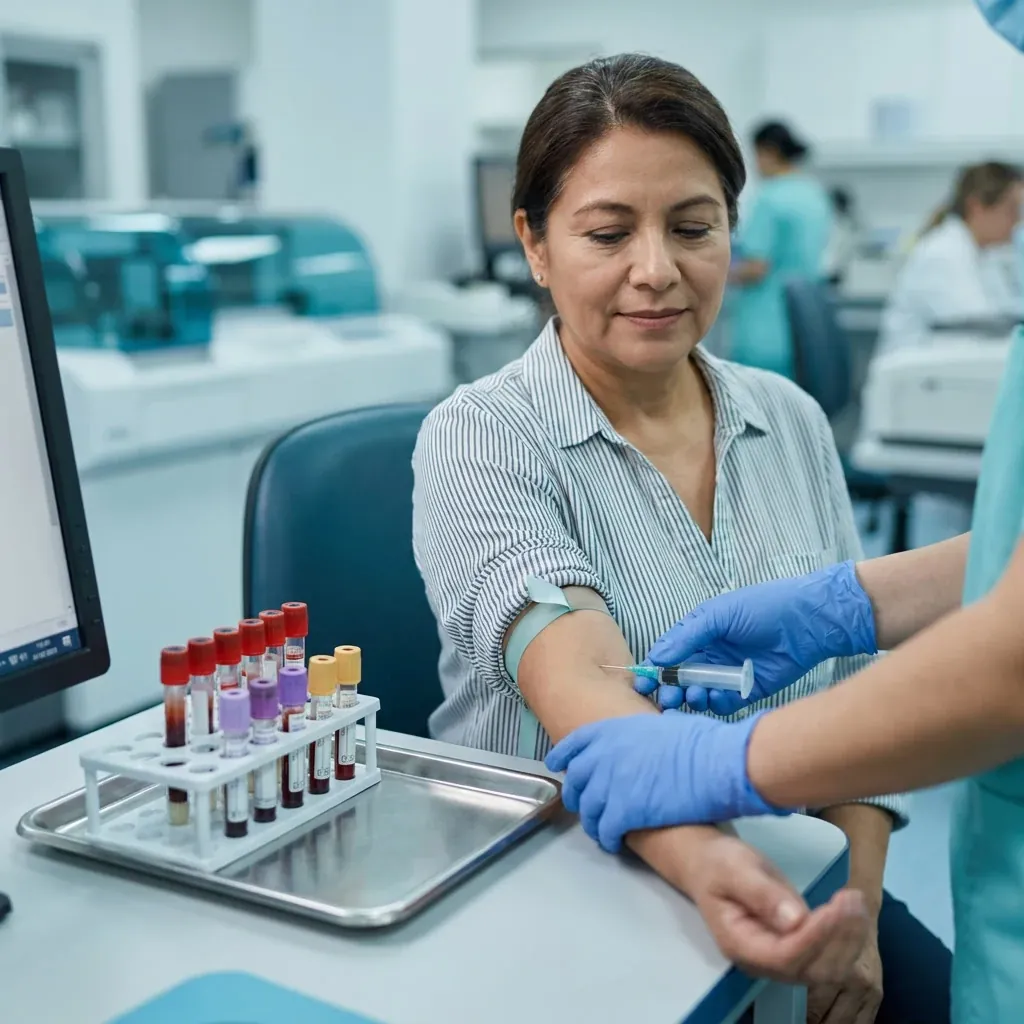
Walk in, or call (346) 222-1006 if you'd rather book: bring us that burning, those constant urges or that strange-looking urine after a week of long shifts on the roof or at the plant, and we'll collect a sample for the urine test at the clinic and, if there is an infection, you leave with your treatment the same day, plus a straight talk, in Spanish or English, about the water and rest-break routine your crew's next hot days call for. So you don't lose the afternoon hunting for another stop before heading back to the site or the night shift, you buy what our doctor prescribed right there at the clinic's on-site pharmacy, along with written instructions.
If the infection keeps coming back or doesn't improve, we send out a urine culture. That result takes a few days and shows which bacterium is involved and which treatment works against it. When the clinic's medical team suspects a stone, they may order an ultrasound, and if it's worth checking how your kidneys are working or whether your sugar runs high, we do blood work.
Signs of heat stroke: call 911
Some things water and shade won't fix. Call 911 right away if you or a coworker:
- Is confused, slurring words, stumbling or passes out.
- Has very hot skin, sweating or not, and isn't responding normally.
- Has a seizure.
- Is vomiting and can't keep fluids down.
- Hasn't been able to pee at all for many hours.
- Has a high fever with chills and severe pain in one side.
While the ambulance is on its way, move the person into the shade, take off heavy clothing and gear, and cool them with water or ice on the neck, armpits and groin. Don't leave them alone, and don't send them home behind the wheel.
On Spencer Highway, close to your job site
We see workers from La Porte, Deer Park, Pasadena and the whole Bayshore area in Spanish and English, in the 77571, with free parking for your work truck. If your urine has come out dark several days in a row this week, or it has started to burn, don't wait for the hot season to end before coming in.