For several months now you've been changing your pad every hour and a half on the first days of your period. Or your period ended ten days ago and brown spots are showing up in your underwear again. Many women call it "just a heavy period" or "a little spotting, nothing serious" and let it go for months, sometimes years, because at home everyone always said that's how it runs in the family.
Sometimes that's true. Other times your body is flagging something that can be treated, and that may also be draining your energy. This guide helps you put numbers on your bleeding, recognize when it's worth a visit and when it can't wait even an hour.
First: when it's a 911 or ER situation
Don't wait for a regular visit if any of these happen:
- A pad or tampon is soaked edge to edge in under an hour, and that keeps repeating hour after hour.
- The bleeding comes with strong dizziness, feeling like you're about to pass out, fainting, paleness or a racing heart.
- You're pregnant, or might be, and you have bleeding or sharp pain on one side of your belly.
- You have a high fever together with pain low in your belly.
- Intense pelvic pain starts suddenly.
In those cases call 911 or have someone take you to an emergency room. If you feel weak, don't drive yourself.
How much is "heavy"? Measuring it at home
"A lot" means something different to every woman, so concrete signs help. In general terms, a period is considered heavy when:
- You need to change your pad or tampon every one or two hours, several times in a row.
- You use double protection (a pad plus a tampon, or two pads) to avoid leaks.
- You get up at night to change, or often wake up with stained sheets.
- You pass clots bigger than a quarter.
- Your period lasts more than seven days.
- You miss work or cancel plans because you're afraid of leaking in public.
A trick that works: during your next period, log every pad or tampon change on your phone with the time and how full it was. If you use a menstrual cup, note how many times a day you empty it. That list says more than any description from memory, and it saves a lot of questions during the visit.
Bleeding between periods: what counts
Intermenstrual bleeding is any bleeding or spotting that shows up outside your period days. Some examples:
- Pink or brown spotting in the middle of your cycle.
- Bleeding after sex.
- Periods that come every two weeks, so you no longer know which one is the "real" one.
- Spotting during the first months of a hormonal birth control method.
- Any bleeding after a full year without a period: that one always gets checked.
Light, one-time spotting mid-cycle can be normal for some women. What's worth checking is spotting that keeps coming back, gets heavier or shows up after sex.
What can wait and what's worth checking
| What you notice | What to do |
|---|---|
| Light spotting one month, with no other symptoms | Write it down and watch the next cycle |
| Spotting in the first months of a hormonal method | Mention it; if it doesn't settle or bothers you, get checked |
| A period longer than 7 days or with large clots | Book a visit |
| Bleeding after sex, more than once | Book a visit |
| Heavy periods plus tiredness, paleness or getting winded on stairs | Get checked soon |
| Bleeding after menopause | Always get checked |
| Soaking a pad an hour for several hours, or dizziness and fainting | 911 or the ER |
Why it happens: common causes
Heavy or off-schedule bleeding has many possible causes, and most of them are treatable:
- Hormonal shifts: common in the teen years, after giving birth and in the years before menopause, when ovulation becomes irregular.
- Hormonal birth control: some methods cause spotting, especially at first. If a method gives you bleeding that bothers you, switching is an option worth talking about.
- Fibroids or polyps: non-cancerous growths inside the uterus that can make periods longer and heavier.
- Thyroid: a slow thyroid can bring heavier periods, along with tiredness, feeling cold and dry skin.
- A pregnancy: unexpected bleeding can be the first clue, even if you haven't taken a test or the home test came out negative.
- Irritation or changes in the cervix: these can cause bleeding after sex; that's why, if it's been a while since your last Pap smear, it may be part of the checkup.
No one can tell the cause from a description alone. That's why the visit puts together your notes, an exam and, depending on the case, a few tests.
Anemia: the hidden cost of heavy periods
Losing a lot of blood every month can slowly drain your iron stores. Many women get used to living exhausted, seeing spots when they stand up fast, having brittle nails or running out of breath on the stairs, and they blame it on the shift, the kids or their age.
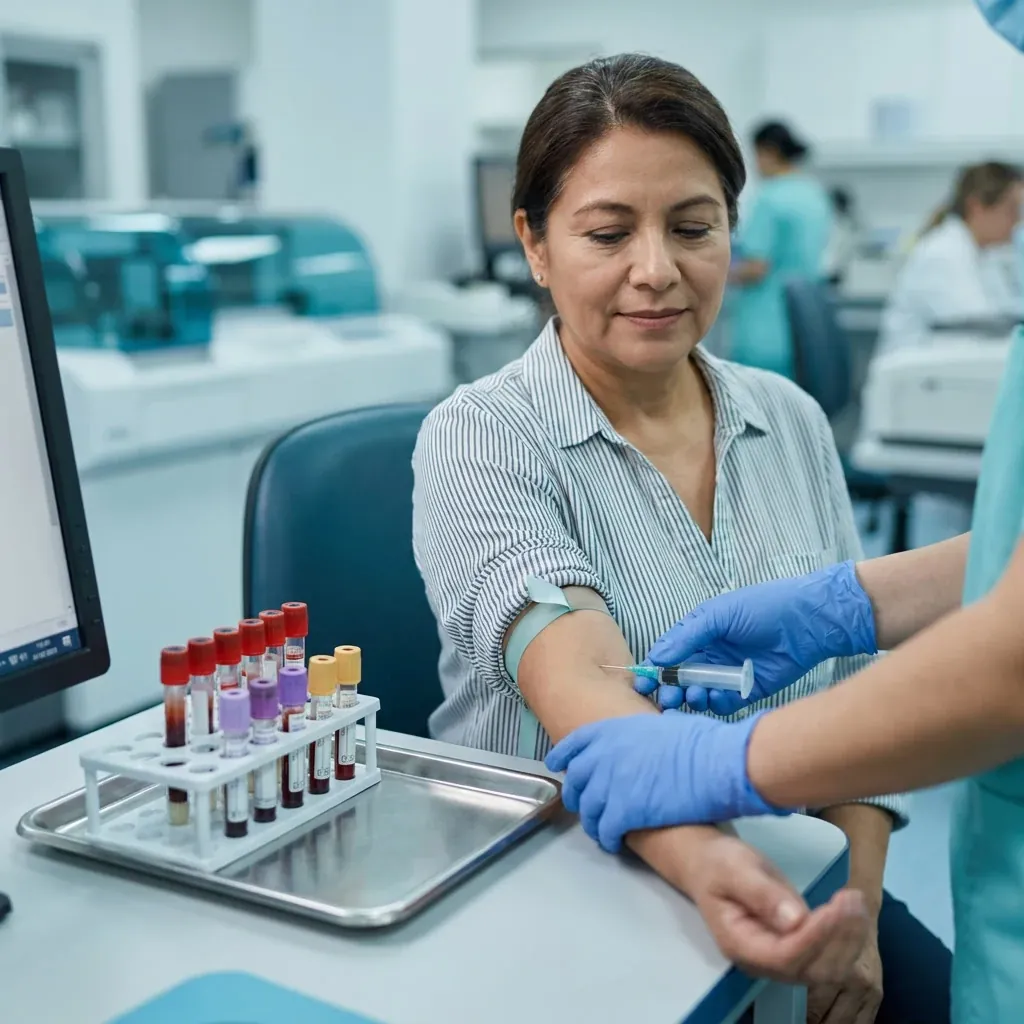
At our blood test lab we run the complete blood count (CBC), the test that detects anemia, and we can also measure iron and ferritin. If the medical team suspects your thyroid, the same lab offers a thyroid panel. Don't start supplements on your own: first it's worth knowing whether there's anemia and, above all, why.
How we look into your bleeding during the visit
At our gynecology visit, on Spencer Highway in the 77571, we see irregular bleeding in Spanish or English, in a private exam room with the door closed:
- We ask about your cycle: when your last period started, how many days it lasts, how many pads you use and when it changed. This is where the list on your phone makes the difference.
- We go over the birth control you use, whether pregnancy is possible and what medications you take.
- We do the exam that fits your case, explaining each step before we do it. You're welcome to bring someone with you.
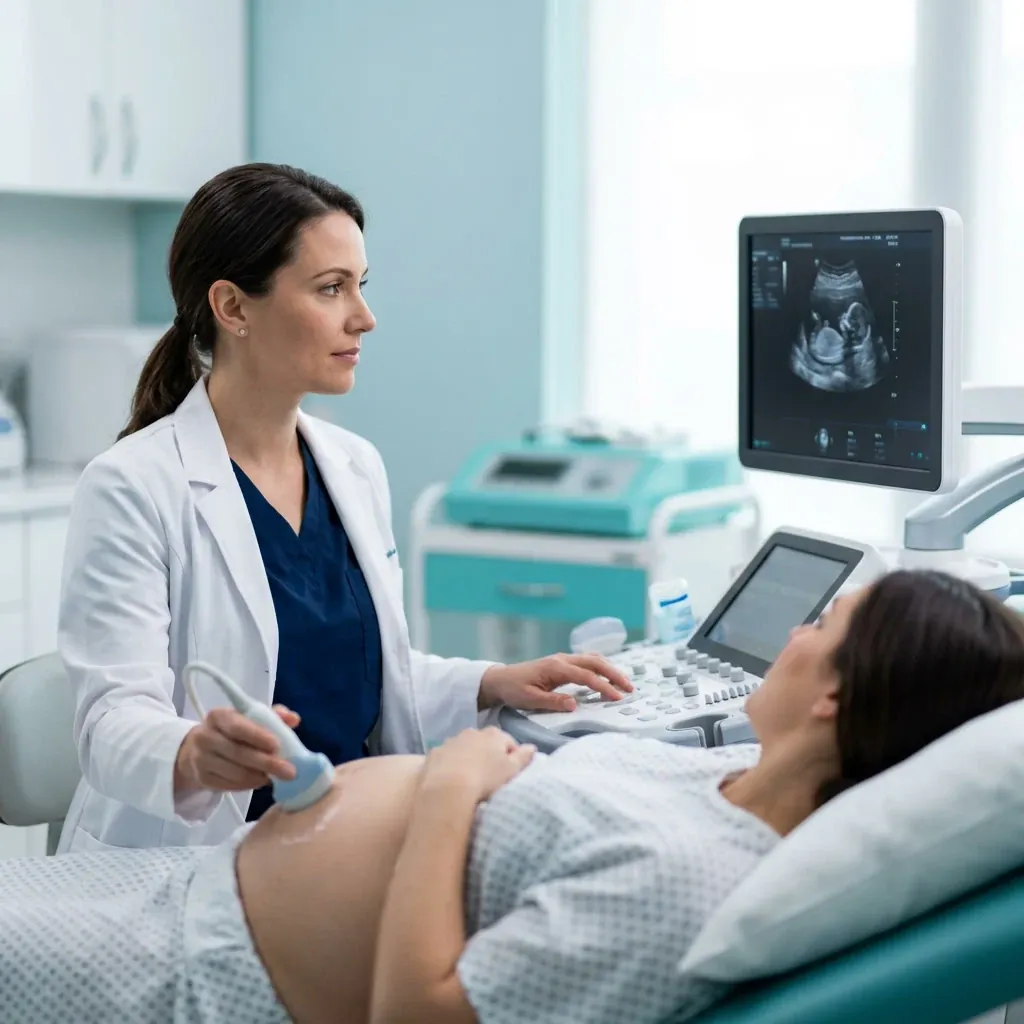
- Depending on what we find, the medical team may order a pregnancy test in urine or blood, blood work to look for anemia or check your thyroid, or a pelvic ultrasound to look at the uterus and ovaries when cysts or fibroids are suspected or there's irregular bleeding.
If the results show something that needs a closer look, we explain it calmly: in some cases a specialized evaluation makes sense, and we tell you what the next step is.
One practical detail: if you're due for a Pap smear, it's best done on days without heavy bleeding. But if the bleeding is exactly what worries you, don't wait for it to stop before coming in.
If the treatment needs a prescription
When the medical team recommends something to control the bleeding or rebuild your iron, you don't have to hunt for another pharmacy on the way home: our pharmacy is inside the clinic, so you walk out of the exam room, hand your prescription over at the counter and leave with the treatment for your periods, with the instructions explained in Spanish.
Before you come: your three-point bleeding log
If you're coming in about bleeding, bring these written down:
- The start dates of your last two or three periods and how many days each one lasted.
- How many pads or tampons you use on your heaviest day, and whether there were large clots or spotting between periods.
- Your birth control method and any medication you take.
A period that makes you plan your whole day around the bathroom isn't something you have to put up with in silence. With those three notes, the medical team at Clínica Hispana Nueva Salud La Porte can turn "I bleed a lot" into a concrete answer and a plan for calmer cycles ahead.