Four in the afternoon, the last stretch of the shift. You're opening a carton at the warehouse and the box cutter blade slips across your thumb. Or on the job site you grab a sheet of metal by the edge without a glove. Or in the restaurant kitchen the knife slides sideways while you rush through a pile of onions. You slap on a bandage strip and keep going, but the blood starts again every time you open your fingers.
A lot of people in La Porte earn their paycheck with their hands: at the refineries and plants, in construction, in the warehouses along Fairmont Parkway, in kitchens. Most cuts only need water and a bandage. This guide is about the rest: the ones that need stitches, the ones made by something rusty or dirty, and the ones that can't wait a single minute.
First of all: when it's a 911 call
Call 911, or have someone take you to an emergency room, if any of these happen:
- Blood is spurting or pulsing out, or it won't slow down even when you press hard.
- A finger or another body part was cut off completely, or is left hanging.
- Something is stuck in the wound: a nail, a metal sliver, a shard of glass or the tip of a tool.
- The wound is very deep, bone is showing, or the person fainted or turned pale and sweaty.
- You can't move a finger, or your hand feels numb after the cut.
If something is stuck in the wound, leave it in. That object may be plugging a blood vessel, and pulling it out can make the bleeding much worse. Leave it where it is, pack clean cloth around it so it can't shift, and wait for the paramedics.
If a finger or body part was cut off, press on the wound to slow the blood. Wrap the severed part in gauze or a clean, damp cloth, seal it in a plastic bag and set that bag on ice, without the ice touching the skin directly. Hand it to the paramedics.
The first few minutes with an everyday cut
For everything else, which is most cuts, these steps help while you figure out whether it needs a checkup:
- Press. Put a clean cloth, gauze or a clean T-shirt over the wound and press firmly without letting go. If it soaks through, add another layer on top instead of peeling off the first one.
- Raise your hand or arm above the level of your heart while you press.
- Rinse with clean running water once the bleeding eases, to wash out dirt, job-site dust or food scraps. Soap goes around the cut, not inside it.
- Don't stuff cotton balls into the wound: the fibers stick and get in the way of cleaning it. Skip the alcohol, hydrogen peroxide, coffee grounds and home remedies too.
- Cover it with a clean bandage, and take rings or a watch off that hand before it swells.
Does this cut need stitches?
A bandage strip works for a shallow cut that closes on its own. Our wound suturing page lists the signs that a wound needs to be closed:
- The edges pull apart and won't come together, or you can see yellow fat or the tissue underneath.
- It keeps bleeding after 10 minutes of firm pressure.
- It's deep or long, especially on the face, the hands or a joint.
- It sits on a spot that moves a lot, like the knuckles, fingers, knee or elbow, and opens up every time you bend.
- It's a clean cut from a knife, glass or sheet metal.
Hands deserve extra care when they're your work tools: tendons and nerves run just under the skin of the fingers. That's why, when the medical team at Clínica Hispana Nueva Salud La Porte checks a cut, they look at how much it bleeds and whether tendons or nerves are damaged, and ask how it happened.
Depends on what cut you
| What it was | What's worth checking |
|---|---|
| Box cutter, utility blade or kitchen knife | Clean cut: if the edges won't meet or it keeps bleeding, it may need stitches |
| Sheet metal, ductwork or a metal edge | Clean and sometimes long; ask about your tetanus shot if the metal was dirty |
| Nail, wire or rusty metal | Dirty wound: time to check when your last tetanus dose was |
| Glass | Tiny pieces can stay inside; it needs a thorough cleaning |
| A tool covered in dirt, grease or debris | Deep rinse and a tetanus check |
Rusty metal or a dirty wound: the tetanus question
An old nail at the job site, a rusty wire in the plant yard, a shovel caked with dirt: those are exactly the cases our vaccine page names when it talks about the booster, along with cuts from rusty metal and dirty tools. So when someone comes in with a work cut, one of the first things we ask is when they last had a tetanus shot.
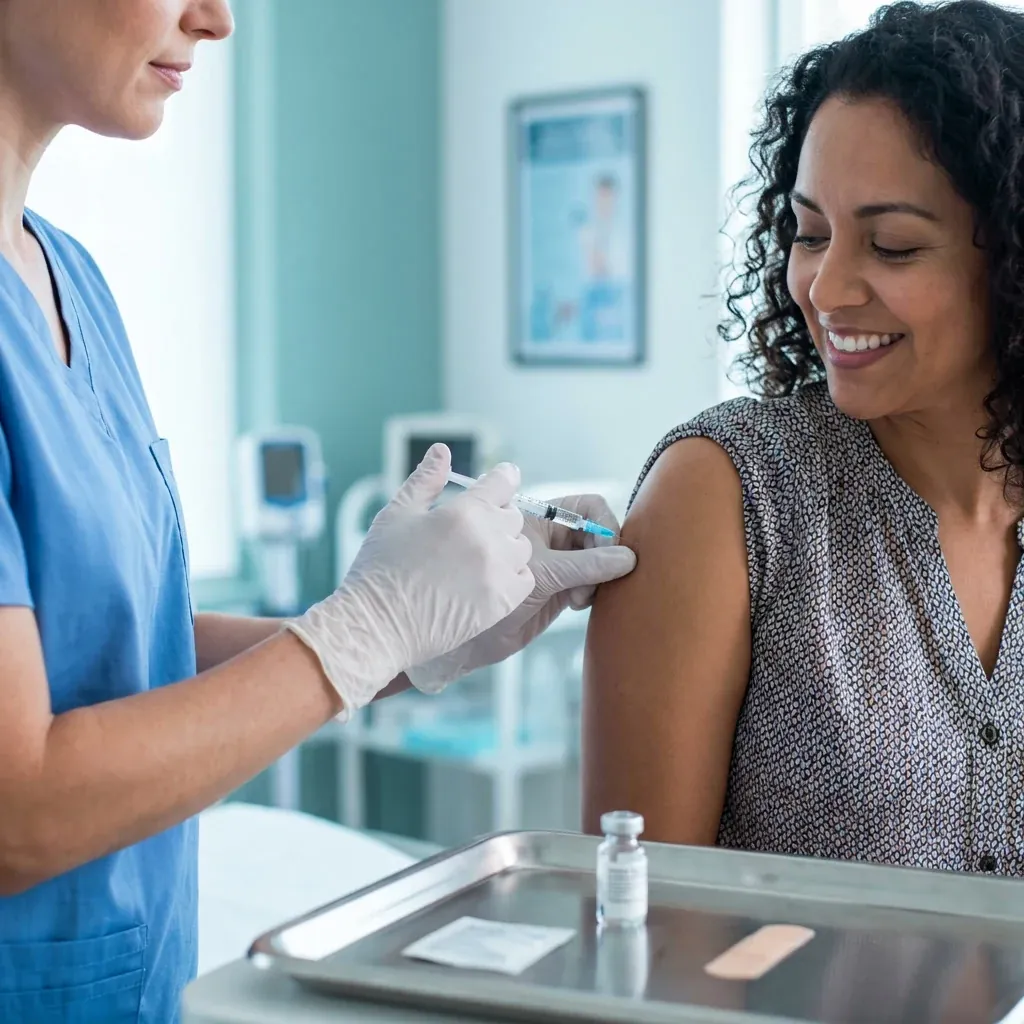
Here is what our vaccines page says: a tetanus booster is recommended every 10 years. The stitches page spells out when that applies to a fresh cut: a dirty wound with your last dose more than 5 years back, or any wound with it more than 10 years back, and in either case the booster goes in while we're treating the cut.
If you can't remember the date, just say so: the medical team reviews your case and explains what makes sense for you.
What we do when you walk in with the cut
At the clinic on Spencer Highway, in the 77571, we treat cuts without an appointment, in Spanish or English:
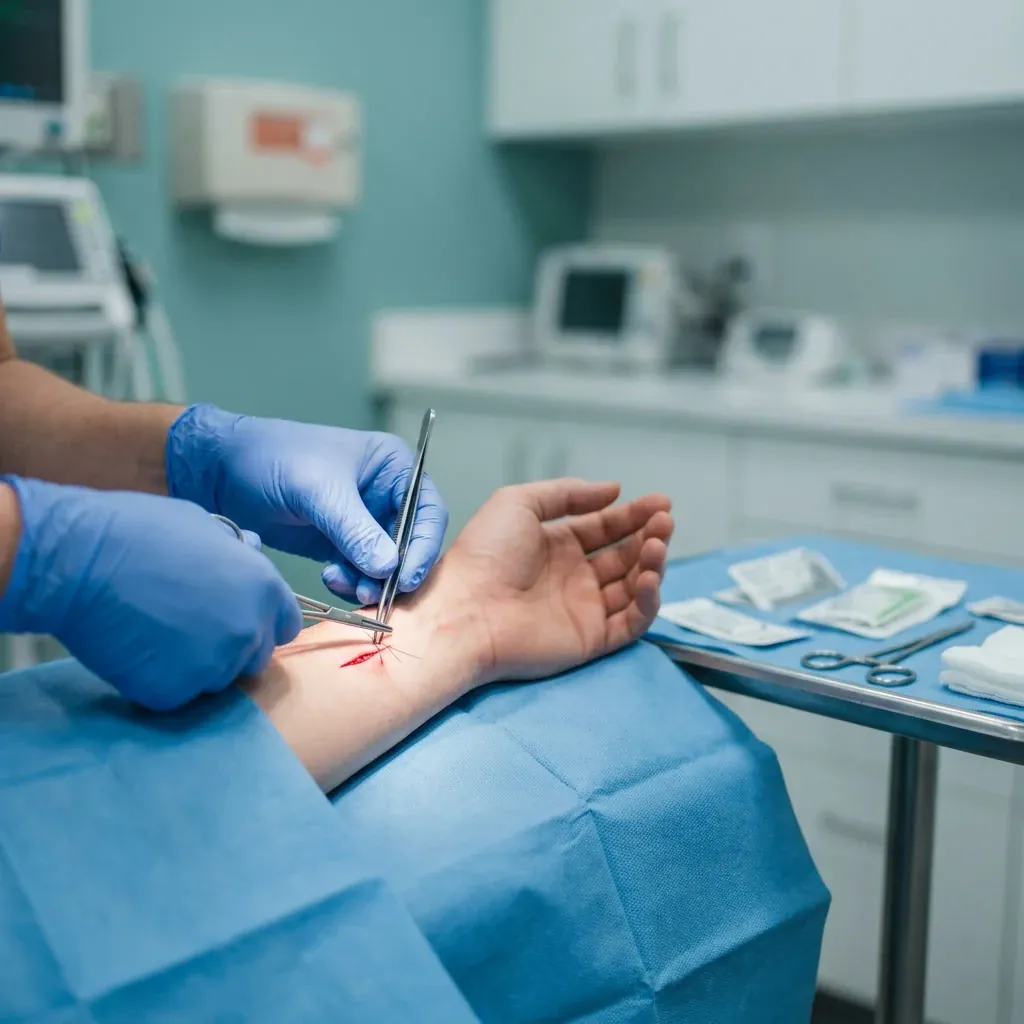
- We examine the wound and ask how it happened and when your last tetanus shot was.
- We apply local anesthesia: that's the only poke you feel.
- We wash it thoroughly and remove dirt, glass or debris.
- We close it with stitches; in small facial wounds we sometimes use skin glue or adhesive strips, no needle.
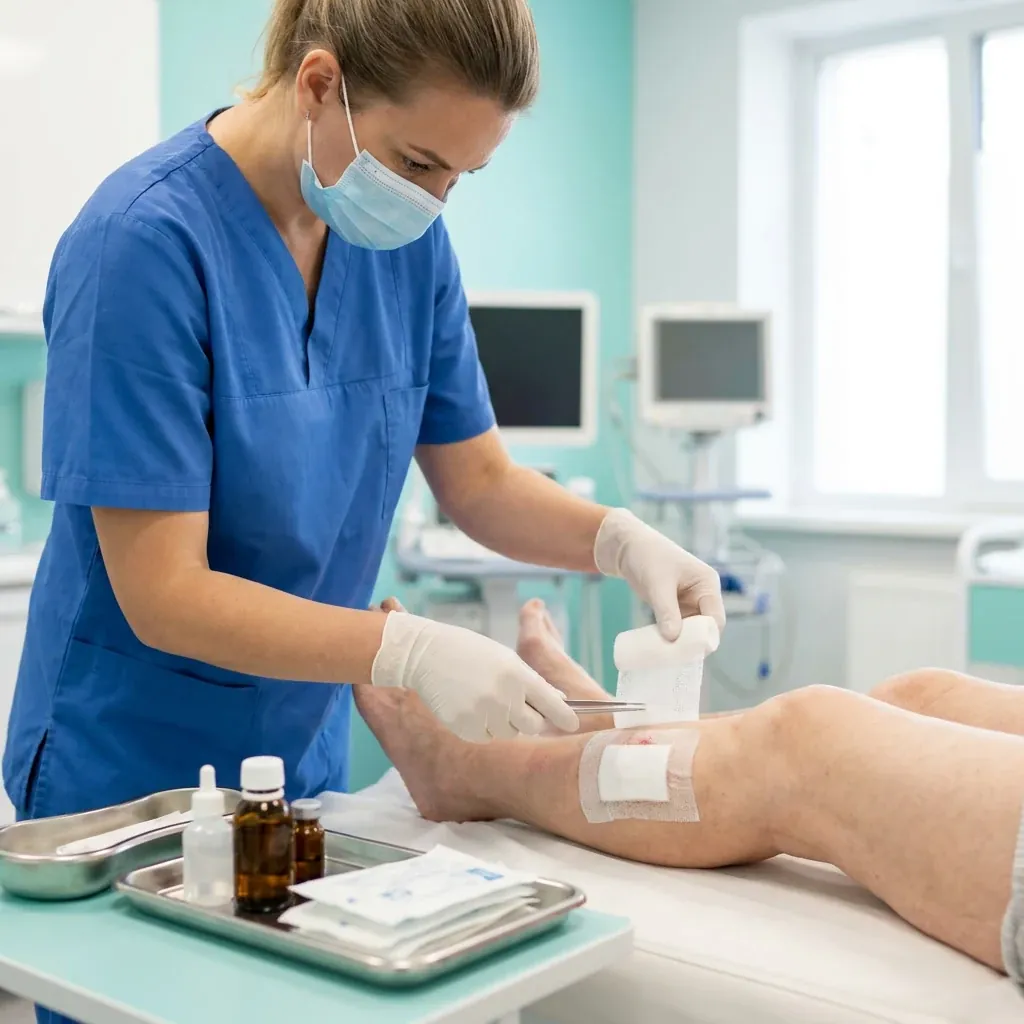
- We cover it with a dressing and explain how to care for it at home.
If you were hurt at work, tell us when you arrive: we document the injury and give you a medical note for your employer.
If the cut doesn't need stitches but it's dirty, it's a big scrape or it has already turned red, what fits is wound care: cleaning, the right dressing and a written plan for the next visits.
Afterward: protect it, even if you're heading back to the shift
If you head back to the site, the warehouse or the kitchen with a bandaged hand:
- Keep the dressing clean and dry; if it gets wet or greasy, change it.
- Wear a glove over the dressing while you work, especially around dirt, grease or food.
- Don't put alcohol or hydrogen peroxide on it.
- Stay out of the bay, pools and bathtubs while you have stitches.
Come back or call us if you notice redness that spreads, warmth, pus, fever or pain that gets worse instead of better. Go to the ER or call 911 if you see red streaks running up your arm, if red skin is spreading fast and you have a fever, or if you feel confused.
And if the medical team prescribes something for the wound, our pharmacy saves you an extra stop before you head home or to your next shift: when the visit is over, you buy the medications prescribed by the medical team at Clínica Hispana Nueva Salud La Porte right there, with the instructions explained in your language.
A habit for your lunch box
Today, snap a photo of your vaccination card or your last tetanus booster record and keep it on your phone. If you ever walk into the clinic with a rag clamped around your hand, that picture answers in one second the question that matters most once the bleeding stops. And if you can't find any paperwork, come in anyway: the medical team at Clínica Hispana Nueva Salud La Porte sorts it out with you while we close the cut.