Fall doesn't arrive in La Porte all at once. It shows up in fits and starts. One Tuesday it's close to 85 degrees with that sticky Gulf air, and by Thursday a cold front pushes through on a north wind, clears the sky and drops the temperature in a matter of hours. A lot of people feel the change in their nose first: sneezing on the walk to the car, a constant drip, a scratchy throat when they wake up. The question we hear most at our Spencer Highway clinic this time of year never changes: is this allergies, a cold, or did I just catch the flu?
You can't always tell from home, but there are some fairly reliable clues. Here's what the weather around the bay has to do with how you feel, and how to sort those clues out.
What bay weather does to your nose
La Porte, Shoreacres and Morgan's Point share a combination most inland towns don't deal with: near-constant humidity from Galveston Bay plus cold fronts that change the air almost overnight. That hits your airways in several ways.
- A north wind carries pollen. Ragweed is the main culprit in the fall, and the dry, breezy days right after a front are the ones that stir up the most of it.
- Humidity feeds mold. After a few rainy days, wet leaves in the yard, bathroom corners, attics and AC filters fill up with spores that float around inside and outside the house all year long.
- Cold, dry air is an irritant on its own. Some people get a runny nose with any sudden temperature swing even though they aren't allergic to anything; the lining of the nose is reacting to the cold, not to an allergen or a virus.
- Turning on the heater for the first time blows out the dust that settled in the ducts all summer.
- Cooler weather keeps us indoors. Closed windows and more people sharing the same air at home, at work or in a classroom make it easier for viruses to spread, which is why respiratory virus season kicks off in the fall.
In other words, the same cold front can set off allergies, irritate a sensitive nose or line up with the start of a virus. That's why the symptoms get mixed up so easily.
Clues to what you're dealing with
It's probably allergies if…
- Something itches: your eyes, nose, the roof of your mouth or your ears. That's the classic allergy sign, and it rarely shows up with an infection.
- There's no fever and no body aches.
- Your mucus is clear and watery, and the sneezes come in bursts.
- Symptoms follow a pattern: they flare after every cold front, when the grass gets cut or in a damp room, and ease up somewhere else.
- You've felt the same for weeks, never fully better or worse, and nobody else at home caught it.
It's probably a cold if…
- It starts gradually: a scratchy throat first, then a stuffy nose and sneezing.
- You may run a slight temperature, but it stays low, and you're tired without being stuck in bed.
- Someone at home or at work had the same thing a few days earlier.
- It gets better on its own within a week to ten days.
It's probably the flu (influenza) if…
- It hits all at once: you were fine in the morning and by afternoon you have a fever, chills and body aches.
- You're wiped out and the cough is dry; your nose matters a lot less than how lousy you feel overall.
- There's a pounding headache, sometimes with pain behind the eyes.
COVID can look like either of the last two, and some people lose their sense of smell or taste. Once there's a fever, the only way to know which virus you have is a test, not a symptom checklist.
One more thing: mucus color by itself doesn't tell you whether bacteria are involved. Yellow or green mucus can show up with an ordinary viral cold and doesn't mean you need an antibiotic.
A trick that actually helps: a weather log
If every change in the weather leaves your nose a mess, try this for two weeks. In a note on your phone, write down each day:
- What the weather did: cold front, rain, north wind, muggy heat.
- What symptoms you had and what time they were worst.
- Where you spent time: at home, at the plant, out on the Sylvan Beach pier, in a carpeted room.
- Whether you took any medicine and whether it helped.
Bring that log to your visit and it becomes one of the most useful things we see. Often the pattern jumps right out: worse on dry, windy days (pollen), worse in the bedroom or after rain (mold and dust mites), or unrelated to the weather and with a fever (more likely an infection).
When the two overlap
Having allergies doesn't protect you from the flu, and one can open the door to the other. A nose that has been inflamed for weeks drains poorly, which makes a sinus infection more likely. In people with asthma, allergies plus a virus can bring on a wheezing cough and shortness of breath, especially at night.
So if you already know you're allergic and suddenly get a fever, body aches or a cough that feels different from your usual one, don't write it off as this year's allergies. Think infection and get checked.
What to do at home in the meantime
If you suspect allergies:
- Keep the windows shut on north-wind days, even when the cool air is tempting.
- Swap the air filter before you run the heater for the first time.
- Shower and change clothes when you get home from work, and wash your sheets in hot water every week.
- If you spot damp patches in the bathroom or under the sink, clean them up and run a dehumidifier.
If you suspect a virus:
- Drink plenty of fluids, rest, and take acetaminophen or ibuprofen for fever and aches if they're safe for you.
- Skip work or school until one whole day has gone by fever-free, with no fever reducer masking it.
- Wash your hands often and cover your cough so the rest of the family doesn't catch it.
When to come in, and what we do
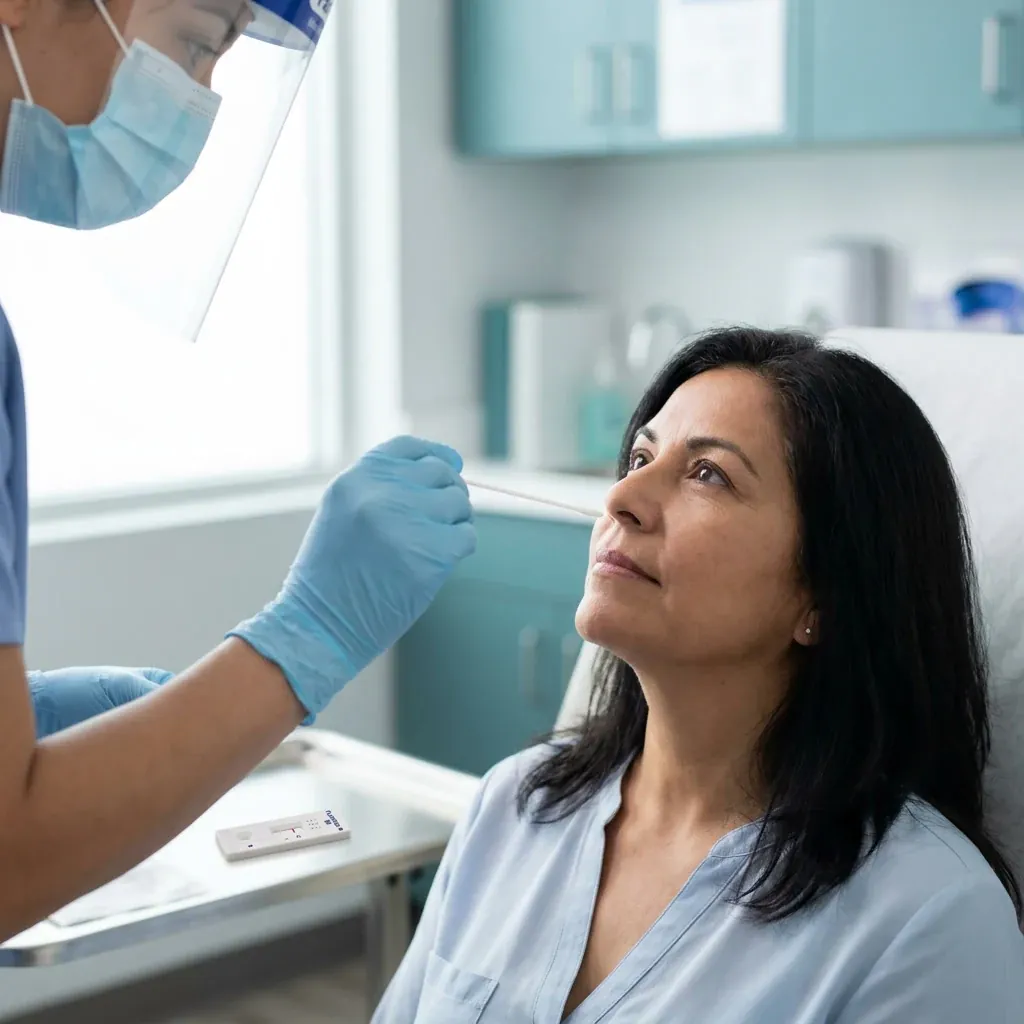
- If you have a fever or feel like you got hit by a truck: we run a rapid flu and COVID test with a nasal swab, and you get the result in minutes. If it's the flu and you're within the first two days of symptoms, or you're in a higher-risk group, the clinic's medical team decides whether an antiviral makes sense for you.
- If your throat hurts most, with a fever and no cough, we add a strep test.
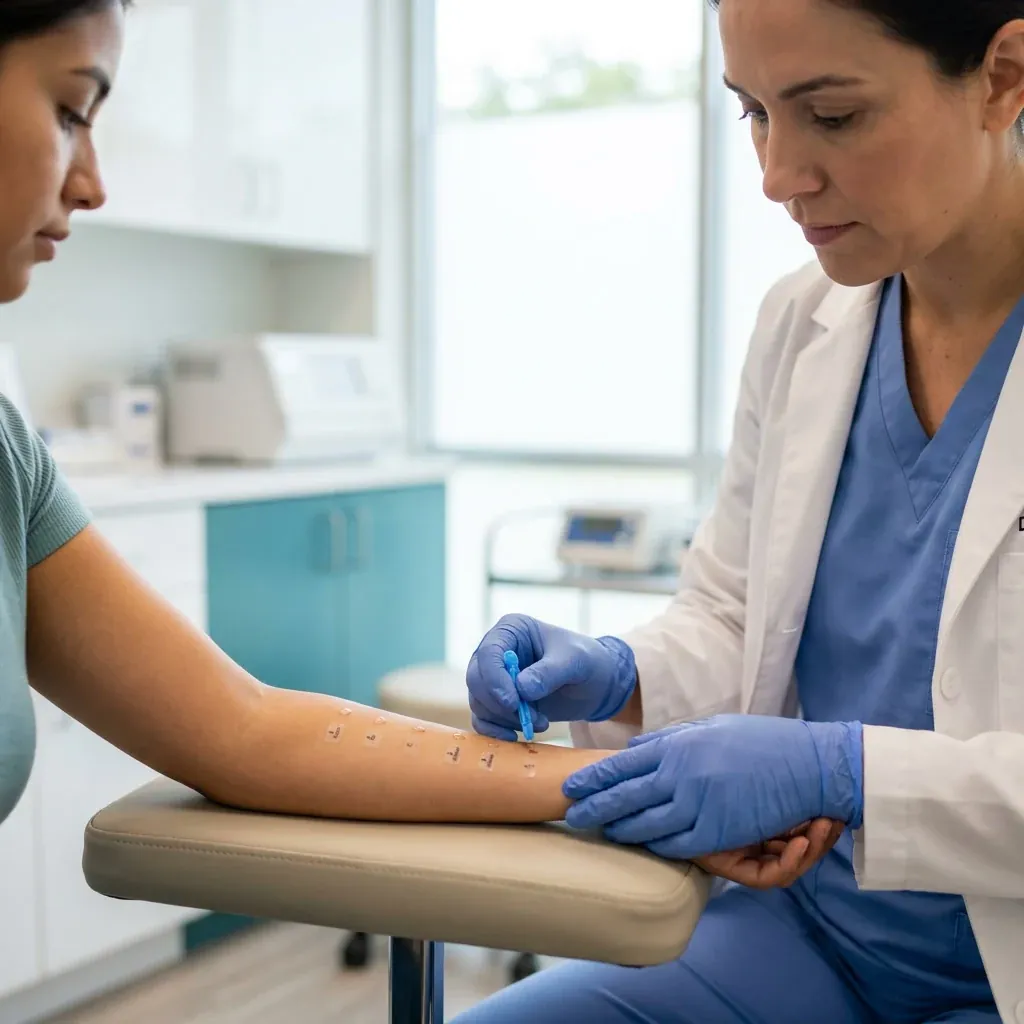
- If every weather change leaves you feeling the same way, what you need is an allergy visit: we go over your symptoms and triggers, and when needed we order blood work to measure IgE and the most common allergens. We'll explain which treatment to use daily during the season and which only when symptoms show up.
- To protect yourself this fall, the flu vaccine is given without an appointment.
Signs that mean calling 911
Don't wait for a clinic visit if there's trouble breathing, chest pain or pressure, bluish lips or nails, confusion or unusual drowsiness, or swelling of the lips, tongue or throat. In any of those cases, call 911 or go to the nearest emergency room.
Find us on Spencer Highway
Clínica Hispana Nueva Salud La Porte is at 9606 Spencer Hwy Ste D, in 77571, a few minutes from Deer Park and Pasadena. We're open Monday through Saturday from 9 a.m. to 9 p.m. and Sunday from 9 a.m. to 7 p.m., with no appointment and no insurance needed, in English or Spanish. If the next cold front leaves you stuffed up again, stop by and we'll figure it out together. Start with our page on flu and COVID testing and respiratory illness care.